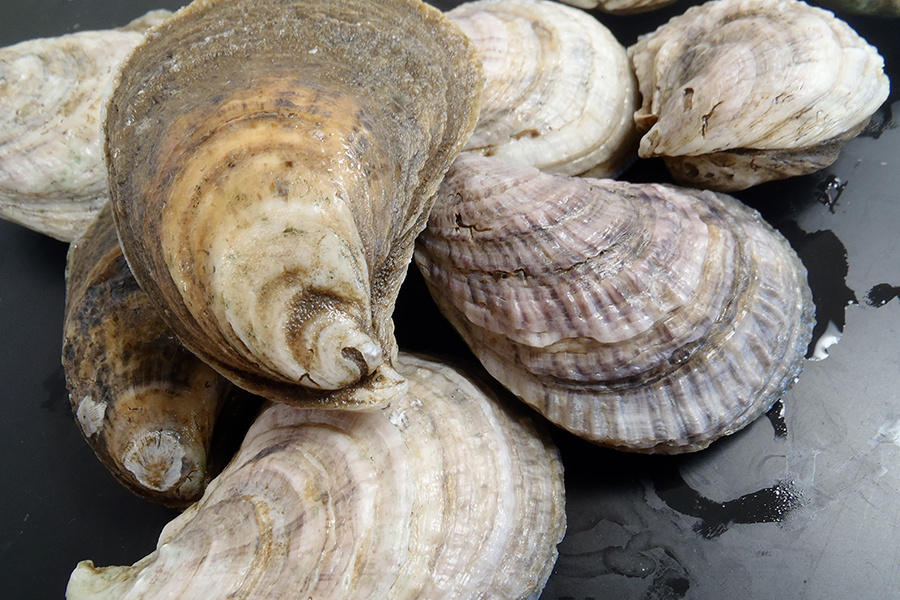
This summer, Salem Sound Coastwatch took on a new kind of coastal restoration project: raising 25,000 tiny oysters in Marblehead. This project is part of a larger goal to help rebuild oyster populations along the North Shore by giving juvenile oysters a safe place to grow before they’re released for restoration.
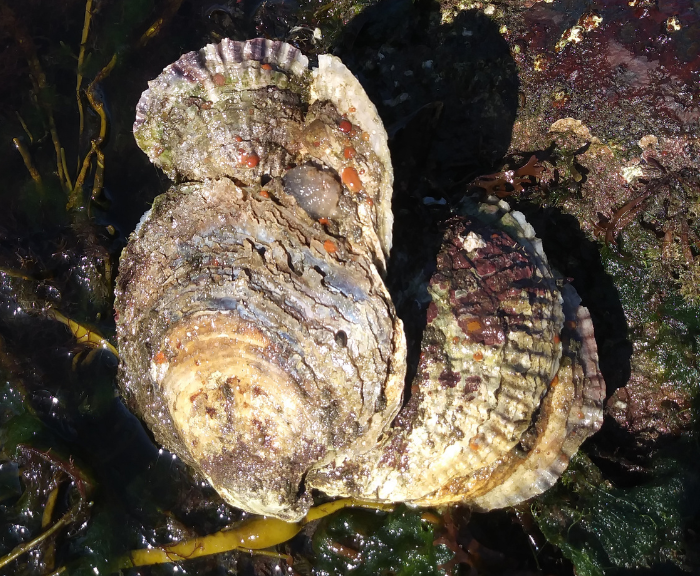
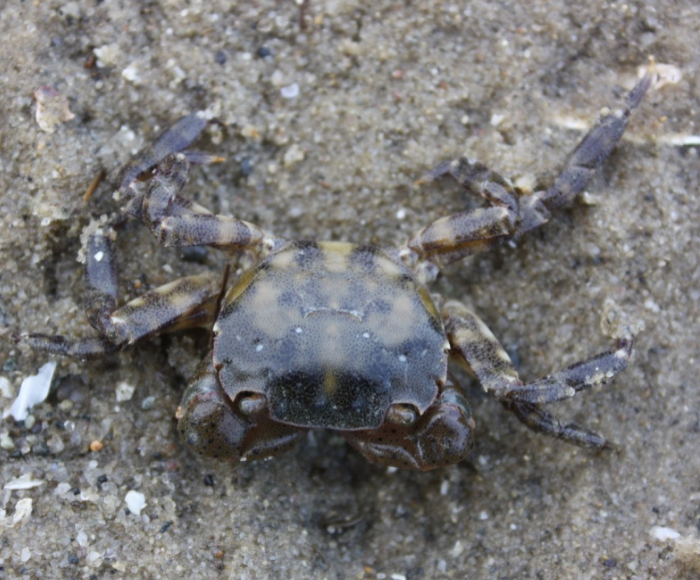
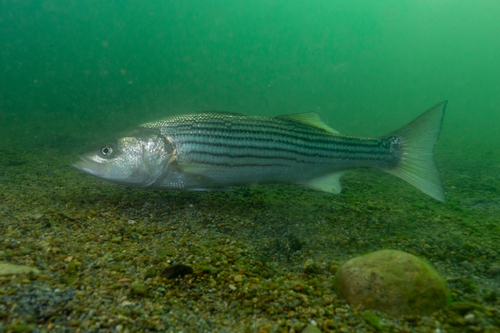
The eastern oyster (Crassostrea virginica) is native to Salem Sound and an important part of our marine ecosystem. Adult oysters can filter up to 50 gallons of water a day, helping to keep our water clean. In addition to their filtering power, oysters can grow together to form strong reefs that provide habitat for fish, crabs, and other marine life and help slow down wave speeds to protect shorelines from coastal erosion.
Oyster populations have declined significantly in Massachusetts over the past century. Oysters are still found in Salem Sound, but restoring larger populations here is complicated by our history of water quality and shellfish regulations.
Salem Sound has been closed to shellfish farming since the 1920s, as bacteria levels here would make it unsafe for humans to eat these filter feeders. Water quality has improved significantly across Salem Sound over the past 30 years. As we continue working to understand and improve the health of our coastal waters, we are also beginning to explore what might be possible for oysters here in the future.
What is an Upweller?
Think of it as an oyster nursery.
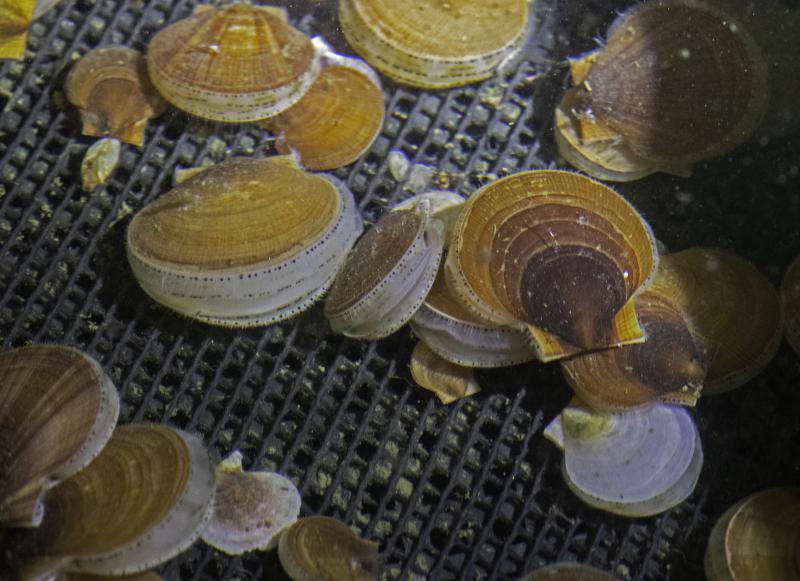
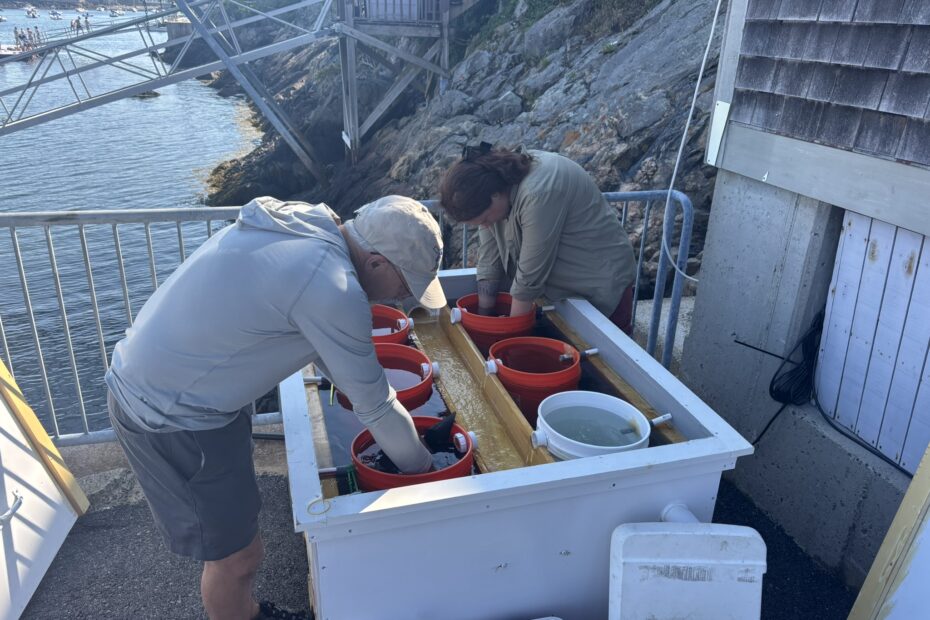
The Marblehead upweller is a large tank drawing water from the harbor, which pumps that water up through mesh-bottomed containers, or “silos,” holding juvenile oysters. Rather than growing in open water, where they’d be exposed to predators and inconsistent conditions, the oysters sit in a steady flow of nutrient-rich water from the harbor that the system pumps past them continuously. That consistent flow helps them grow faster and more reliably during their most vulnerable stage, so more of them can be released for restoration.
Impact Through Partnership
The Marblehead upweller is part of Massachusetts Oyster Project’s network of nine oyster upweller sites along the coast. Mass Oyster Project provides the young oysters and technical expertise, while local organizations take responsibility for maintaining individual sites.
Salem Sound Coastwatch is responsible for cleaning, collecting data, and maintaining the oyster upweller daily. Our staff are supported by a dedicated team of community volunteers. Sustainable Marblehead and Tower School have been invaluable partners, helping recruit volunteers and building community support for the project.
Thank You Volunteers!
The upweller needs to be checked every day. Volunteers are an essential part of keeping it running. They help monitor the equipment, make sure water is flowing properly, and care for the oysters.
About nine regular volunteers have stepped up this season, with some coming every week and others filling in when needed.
How are the Oysters Doing?
The oysters went into the upweller on July 1st at about 2 millimeters, roughly the size of a grain of rice. We started with 25,000 and still have most of that original number.
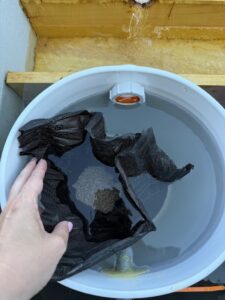
Before oysters can be released for restoration, they’re required to pass a pathology test screening for disease. Our most recent sample went through that testing and came back clear across the board. That same sample showed oysters ranging from 3 to 10 millimeters, which reflects healthy, if uneven, growth over the past several weeks.
The oysters will stay in the upweller at least through the end of September. By the time they leave, they may be approaching 25 millimeters, roughly the size of a quarter. From there, they’ll be transported to Ipswich for shellfish restoration work in the Plum Island estuary. Due to current regulations, oysters must be seeded in waters open to shellfish farming before they reach a harvestable size of 3 inches.
One Small Project, Part of a Bigger Picture
Salem Harbor’s water quality has come a long way since 1920, and work like this is part of how it keeps improving. Boston Harbor offers a powerful example of what’s possible: after decades of cleanup work, parts of it reopened to shellfish harvesting in 2026 for the first time in a century.
There’s no set timeline for Salem, and any future reopening would require meeting rigorous water-quality standards. But progress starts with the work we can do today.
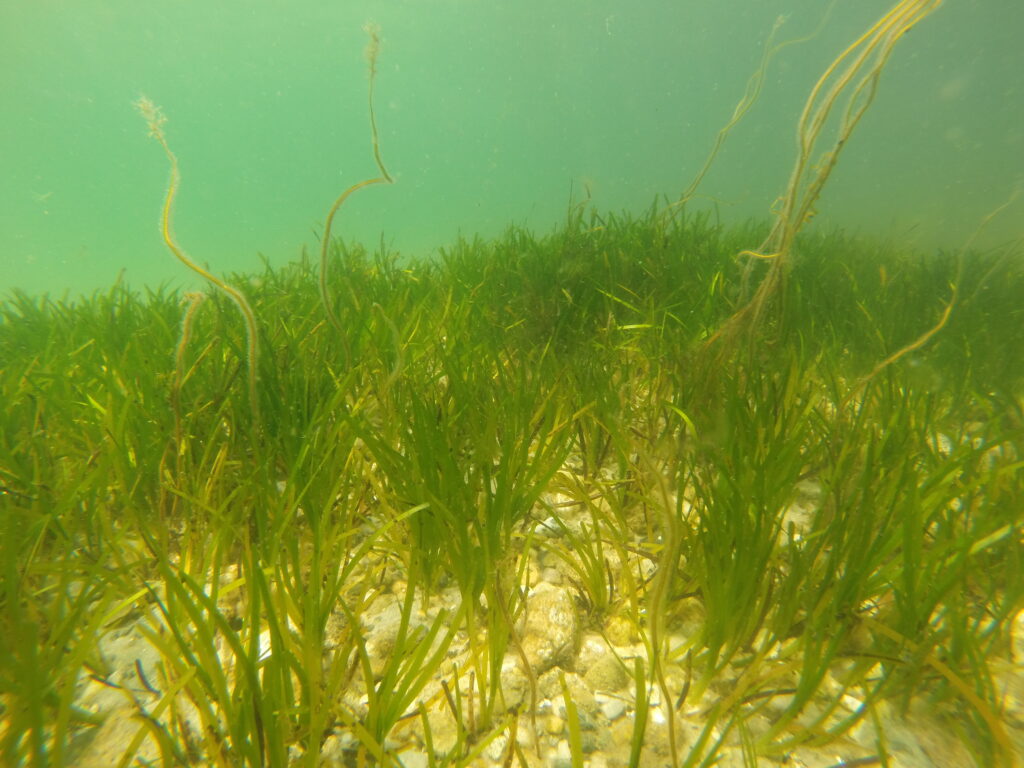
For us, that means science, restoration, partnerships, and people willing to get involved. Every upweller, water-quality test, eelgrass planting, river cleanup moves us a little closer to a clean and restored Salem Sound.
This project is possible because of the people who believe in the importance of a healthy Salem Sound. We are grateful to the donors and partners whose support makes the staff, equipment, and volunteer coordination behind this work possible.
Want to be part of the work? Follow Salem Sound Coastwatch to see how these oysters, and the Sound they call home, continue to grow. You can volunteer with us, support our work with a donation, or simply stay connected as we continue working toward a healthier Salem Sound.