The waters of Salem Sound have sustained people for thousands of years, providing an essential food source for the communities that call this region home. While fishing methods have changed significantly over time, there is much we can still learn from traditional practices.
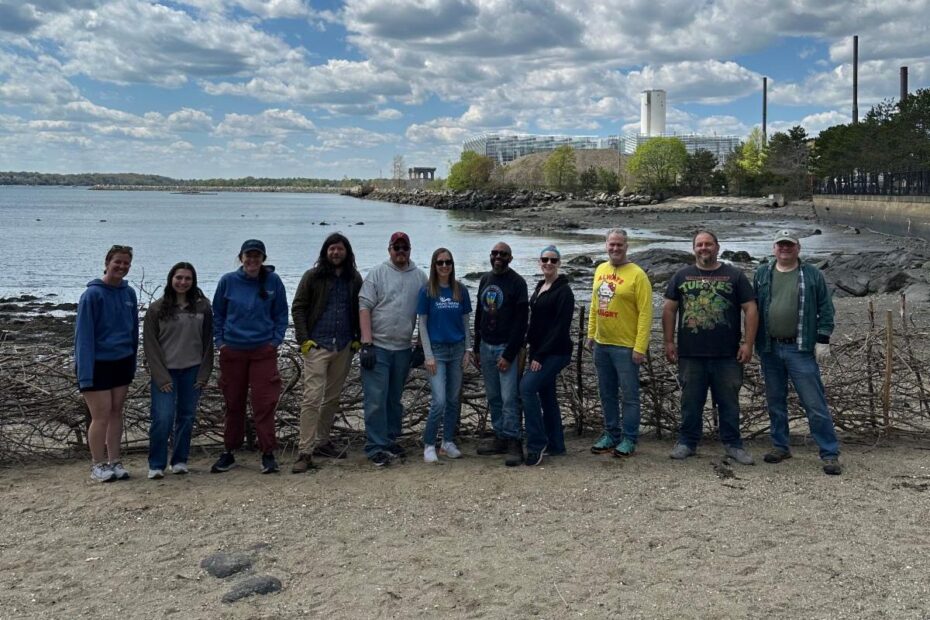
From May 5 – 9, Salem Sound Coastwatch, members of the Massachusett Tribe at Ponkapoag, and the City of Salem engaged the community in creating a historically accurate fishing weir at Cat Cove. Each weekday, 4th grade students from across Salem Public Schools learned about Indigenous fishing methods, used wooden stakes and bittersweet vines to build their own fishing weirs, sampled fish that would have been caught locally, and explored connections within the watershed.
On May 10, the team reunited at Dead Horse Beach for a public community event, offering participants of all ages the opportunity to learn through the same hands-on experience.
As our local ecosystems face growing threats to marine biodiversity and ecological resilience, participants gained not only an important historical perspective, but also a deeper understanding of how humans can coexist with nature while minimizing environmental harm.