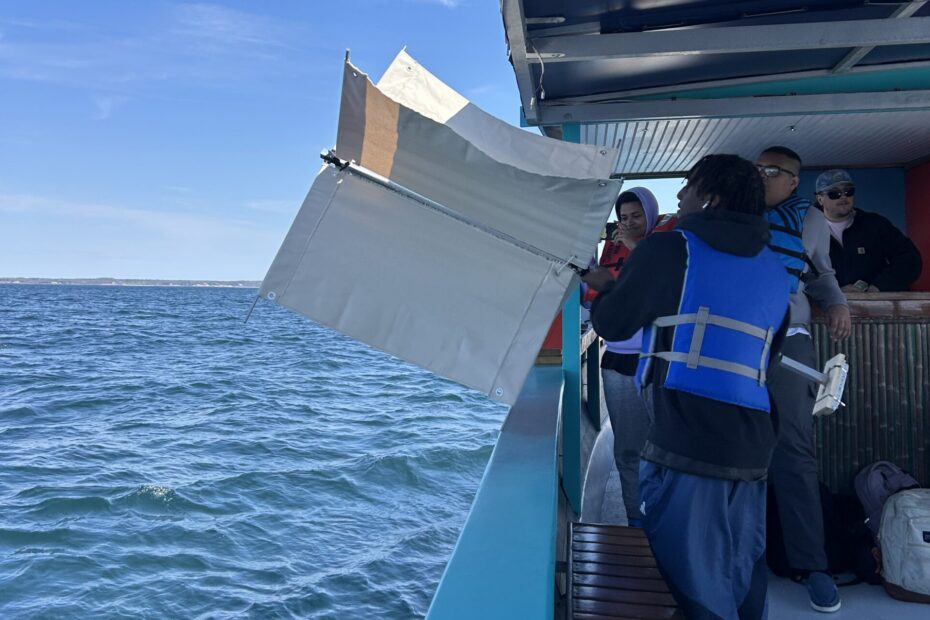
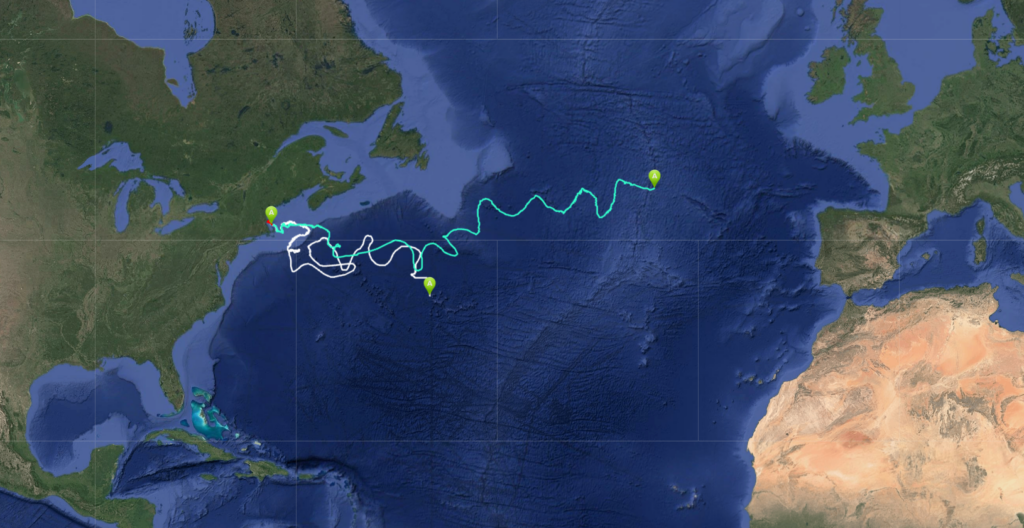
Two ocean drifters built by Salem High school students are halfway across the Atlantic Ocean and could reach Europe! Their journey began in the classroom where students worked with Salem Sound Coastwatch to build and release these small but powerful scientific instruments. They are not alone; a third drifter joined them this fall.
What is an ocean drifter? And what can its journey teach us?
Ocean drifters are floating devices that track ocean currents and collect data via satellite telemetry. Though ocean currents have a relatively set path that they follow, there are changes and disruptions to them due to tides, wind and waves, weather, temperature, and salinity. This is why the data collected from the drifters is so important: it helps scientists better understand and predict environmental events that are impacted by ocean currents, including weather, storm movements, and the distribution of marine organisms
This fall marked Salem Sound Coastwatch’s fourth student drifter release, building on one release in 2017 and two in spring 2026. Most recently, we worked with Salem High School’s Marine Biology, Physical Oceanography, and Engineering classes to build and deploy the drifters. This project brings science, technology, engineering, and math (STEM) learning to life, giving students the opportunity to contribute to real-world scientific data collection on ocean currents.
The drifter that we built with Salem High School students is the most current student model and is referred to as the “Irina” drifter. It is designed to have a mast and four sails that sit underwater to move with the currents, a buoy on top to float, and a satellite transmitter to send data. Drifters were originally conceptualized by the Gulf of Maine Lobster Foundation as an affordable professional research project to track ocean currents in relation to lobster larvae. In 2004 NOAA (National Oceanic and Atmospheric Administration) in Woods Hole, MA expanded its scope to invite students to build, track, and learn about drifters and ocean currents. More than 1,500 drifters have now been deployed, and the data they collect is used for NOAAs Integrated Ocean Observing System (IOOS) and validates ocean circulation models.
One of the most interesting things about tracking ocean drifters is discovering just how differently they can travel, even when launched from nearly the same place.
Spring 2026’s two drifters are evidence of how a slight difference can significantly alter the course of something in the ocean. Despite starting right next to each other, the two took different paths across the ocean. These observations are why we decided to re-engage students to release another drifter in fall 2026 with Salem High School. Join us as Salem Sound Coastwatch and Salem High School students continue to track these three drifters and learn more about our oceans’ currents.
Curious where they are now? Follow the journeys of our three drifters and track their locations in real time: Track our ocean drifters.
To learn more about the Student Drifter Project, Ocean Currents, and Salem Sound Coastwatch’s involvement, take a look at our Underwater in Salem Sound lecture from spring 2026.
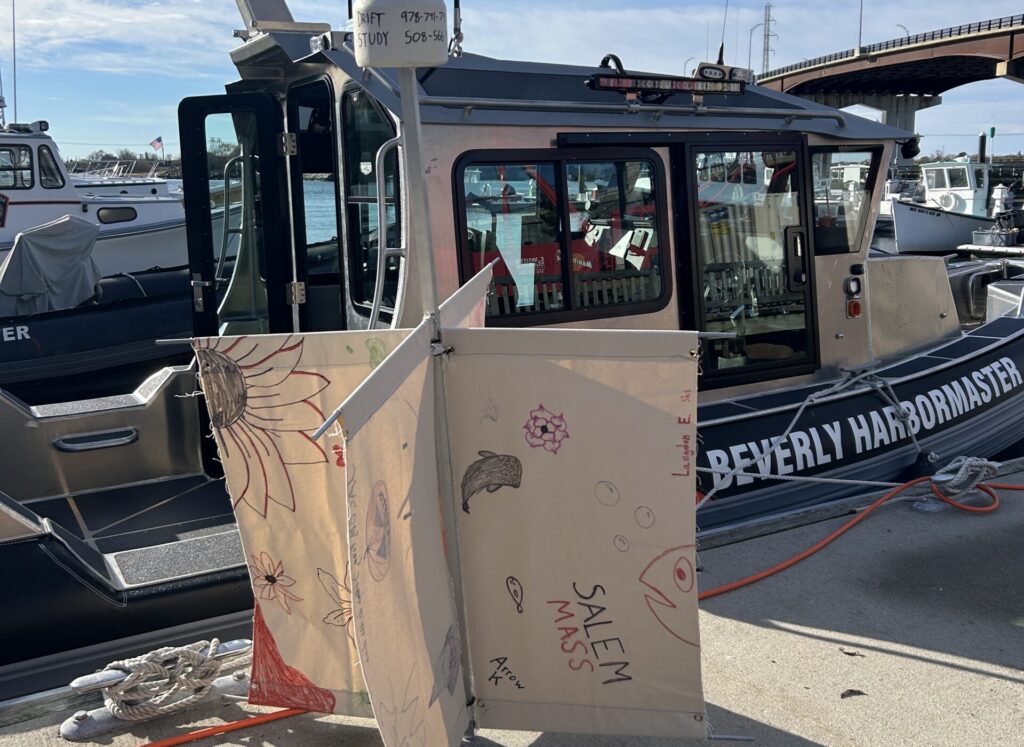
We would like to thank MIT SeaGrant and Norman H. Read Trust for providing funding for this project, Mahi Cruises and the Beverly Harbormaster for providing boat transportation, Gulf of Maine Lobster Foundation for designing drifters, and Salem High School for their partnership in the classroom.