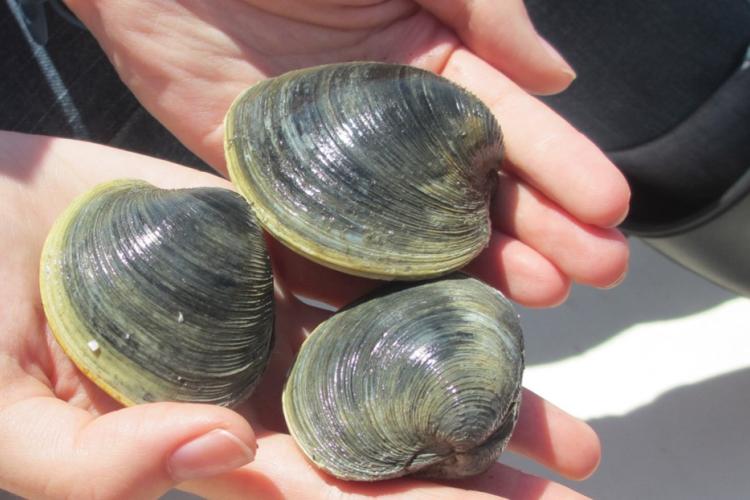
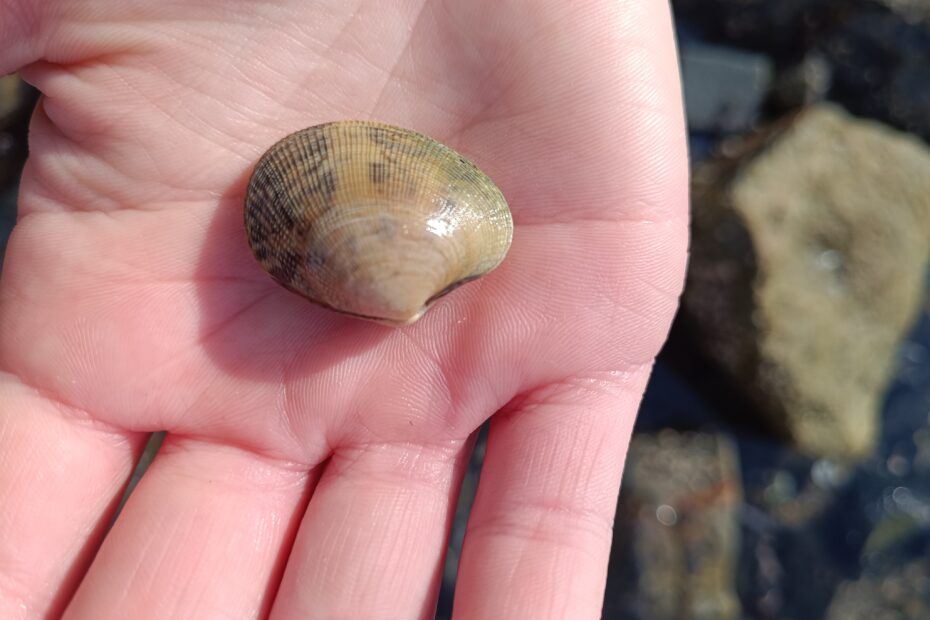
The Manila clam, also known as Japanese littlenecks, has recently been found on the shoreline of Massachusetts. Over the past couple of months, Salem Sound Coastwatch has been alerted to a new non-native species to watch out for. Originally native to the western Pacific Ocean, Manila clams are now found worldwide. They were intentionally introduced to the Pacific coast of North America and Europe between the 1930s and the 1970s due to their high commercial value and are now one of the most widely cultivated clam species for their delicious taste and relatively fast growth.
SSCW’s first sighting of a Manila clam was at Lynch Park beach on August 27th. Since then, there have been two more sightings at the same beach, with seven found the second time, and one more found the third time. We have collaborated with the Massachusetts Office of Coastal Zone Management and Northeastern University on the hunt to find these clams. We’ve looked from Salem all the way north to Gloucester at numerous beaches but have only seen them at Lynch Park beach.
Would you like to get involved in our investigation?
If you find a Manila clam, take a photo of it and upload your picture to iNaturalist. To tell Manila clams apart from our native clam species, they have a distinctive crosshatch pattern, whereas native clams only have ridges running parallel to the edge of the shell. The shell coloring is highly variable but often has cream and black coloring with streaked or angular patterns. When found, iNaturalist is used to compile data from all sightings and allows for public access to the data. The recent sightings of the Manila clam in Massachusetts worry local environmentalists because they could potentially outcompete native mollusks and other species, which would have negative impacts on the local ecosystem. This had led to an investigation into whether the species has established a population here or if they are just discarded shells from local seafood dinners.