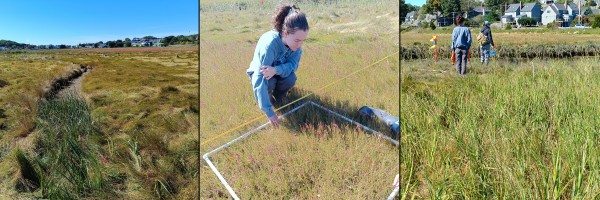
SSCW staff recently completed vegetation monitoring at the Good Harbor salt marsh in Gloucester as part of a Bruce J Anderson Foundation grant. We’ve monitored this marsh since 2001, providing valuable long-term data on the plant species present and how the marsh has changed over time. Over the past 25 years, our data show that the species and abundance of marsh plants in the high marsh zone have remained relatively stable over time.
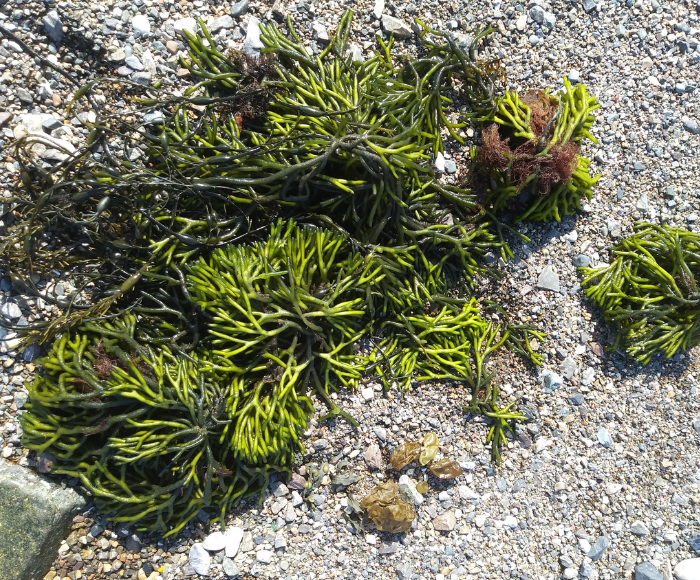
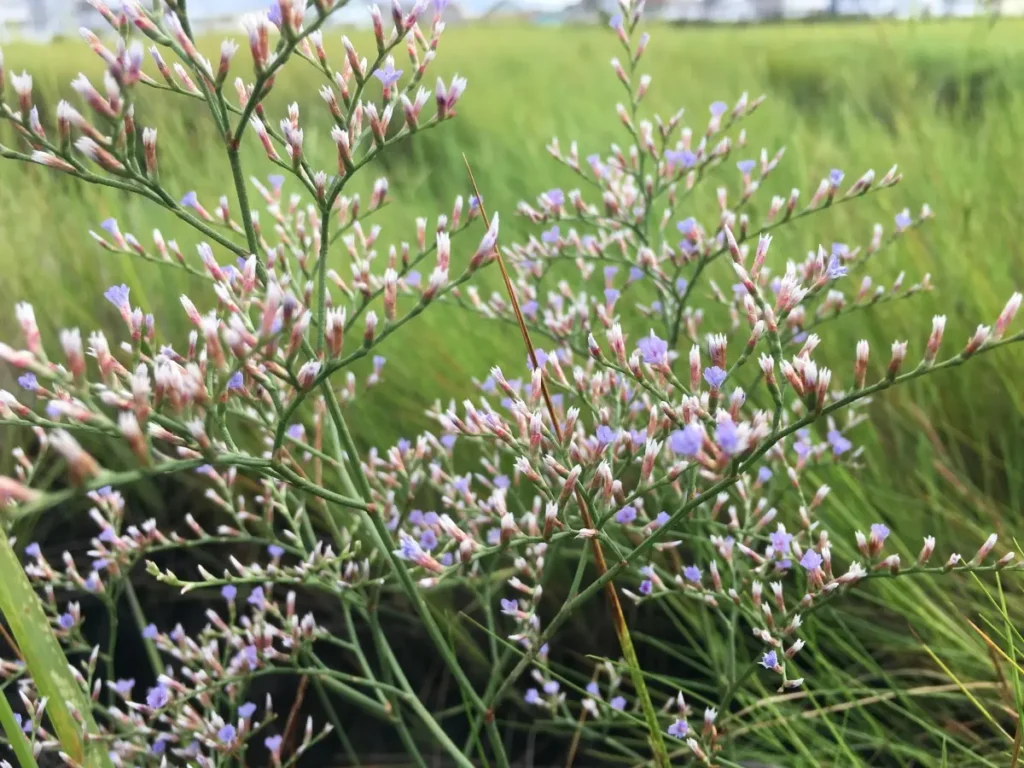
However, we’ve observed considerable changes to the dominant plant species located in the low marsh zone along the creek bank. Historically, this area was dominated by smooth cordgrass, a plant that can withstand being submerged by salt water twice a day. However, our data show that sea-blite, an opportunistic plant that colonizes disturbed areas, has become the dominant species in the low marsh zone. This, along with documented areas of marsh collapse, indicates the marsh may be experiencing changes associated with climate change, as sea level begins to encroach landward.
Long-term monitoring helps us better understand and protect this vital habitat for the future. The marsh ecosystem plays a crucial role in supporting wildlife, filtering water, and protecting our coastline. We thank the Bruce J. Anderson Foundation and the Boston Foundation for supporting this important, community-driven work!