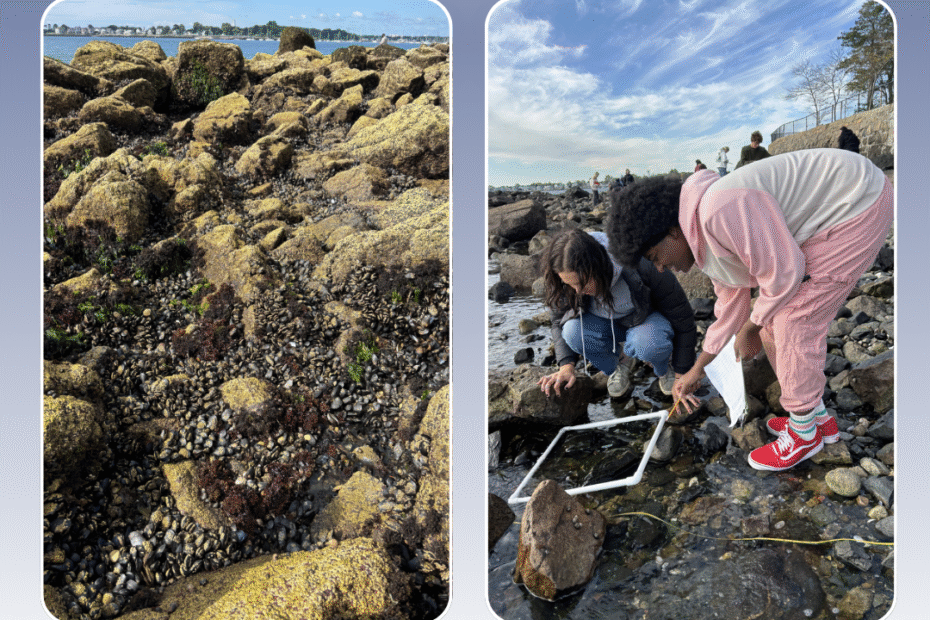
For decades, blue mussels were one of the most familiar sights on New England’s rocky shores, forming dense beds that supported a web of marine life. A growing body of scientific research paints a starkly different picture today: wild mussel populations in the Gulf of Maine have declined dramatically over the last 40 years. Historic survey data from the 1970s show that mussels once covered up to two-thirds of the intertidal shoreline from Cape Cod to Maine. Today, scientists have documented reductions of over 60% in mussel abundance and in a few places almost total absence where thick beds once dominated.
Part of what makes these declines so concerning is that blue mussels are a foundation species, meaning they provide habitat and shelter for small marine creatures, serve as an important food source for shorebirds and fish, and act as natural filters that clean coastal waters. When mussels disappear, the entire intertidal community changes. Seaweeds and barnacles take over, while important species lose critical habitat.
Researchers point to a variety of potential stressors driving this downturn. The Gulf of Maine is one of the fastest-warming areas of the global ocean. Rising air and water temperatures push mussels beyond their comfort zones, increasing stress and mortality. Invasive species like the European green crab also prey upon mussels that are already weakened by heat and other stressors. While long-running monitoring programs like NOAA’s Mussel Watch track contamination and health indicators in mussels, climate-driven changes and pollution remain an overarching concern for this foundational species.
Salem Sound Coastwatch, along with the other regions within the MassBays National Estuary Partnership, are tracking blue mussel abundance across the state. While we’ve started to monitor the rocky shorelines along Salem Sound to collect present-day data, we’re looking to our network of volunteers to provide YOUR mussel stories to help us understand where mussels historically used to be.
If you’ve noticed a change in mussel abundance in the area, please consider taking a survey to tell us more!